Marble vs Quartz Countertops: A Luxury Buyer's Guide
The Two Contenders
In luxury kitchens, the countertop decision usually comes down to natural marble or engineered quartz. Both are premium choices, but they serve different priorities. Marble is the heritage play — it has the depth, character, and prestige that no engineered product can replicate. Quartz is the performance play — it delivers consistent aesthetics with virtually zero maintenance.
Neither is objectively better. The right choice depends on how you use your kitchen and what you value most in your materials.
The Case for Marble
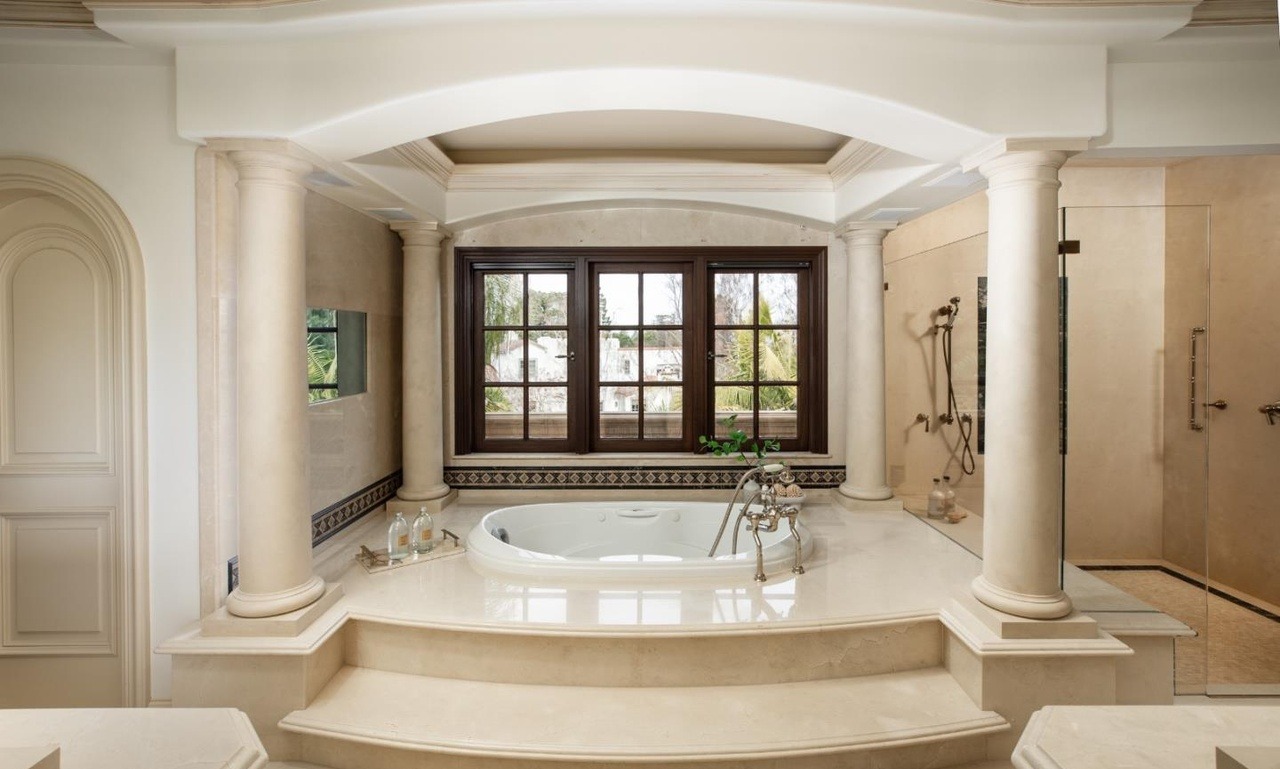
Nothing matches the visual depth of natural marble. The veining is unique to each slab, creating one-of-a-kind surfaces that engineered materials can only approximate. In luxury homes, that uniqueness is part of the value proposition — your kitchen is literally irreplicable.
Calacatta marble (dramatic bold veining on white) and Statuario (finer, more linear veining) are the most specified varieties in high-end projects. A bookmatched waterfall island in Calacatta Gold is arguably the most impactful single element you can put in a luxury kitchen.
The patina argument: marble develops character over time. It etches, it stains slightly, it softens. For many homeowners, this living quality is a feature, not a bug. A marble counter that shows its life is part of the European kitchen tradition that luxury American design draws from.
The Case for Quartz
Engineered quartz has gotten remarkably good at mimicking natural stone. Premium brands like Caesarstone, Cambria, and Silestone now offer marble-look patterns that are convincing at a glance, though they lack the depth and variation of natural stone under close inspection.
The practical advantages are real: quartz is non-porous (no sealing needed), stain-resistant, and scratch-resistant. For kitchens that see heavy daily use — families with kids, serious home cooks, frequent entertainers — the maintenance difference matters.
Quartz also offers consistency. You can spec a pattern and know exactly what you're getting across a 12-foot island. With marble, slab selection is an art — and a mismatch between slabs on a large surface is visible.
What Luxury Designers Actually Choose
In the 2,400+ luxury kitchens in our collection, natural marble and quartzite appear significantly more often than engineered quartz. This tracks with what we see in the market: at the highest price points, natural stone is still the default.
The growing middle ground is quartzite — a natural stone that offers marble-like aesthetics with significantly better durability. Taj Mahal quartzite and Mont Blanc quartzite have become the go-to specification for designers who want natural beauty without marble's maintenance concerns.
Cost comparison at luxury spec: marble runs $100-250/sq ft installed, quartz $80-150/sq ft, and quartzite $120-300/sq ft. At these price points, the material cost difference is a rounding error on a $200K kitchen.